
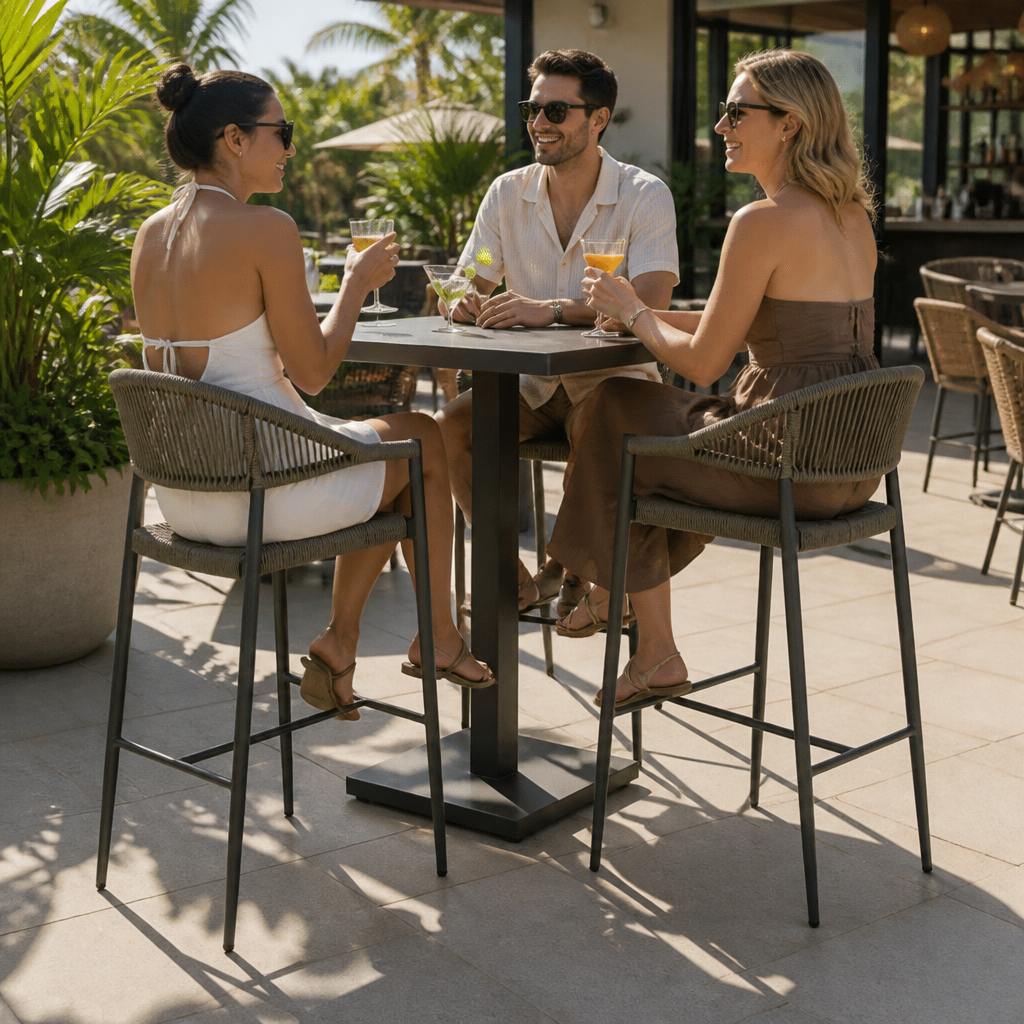
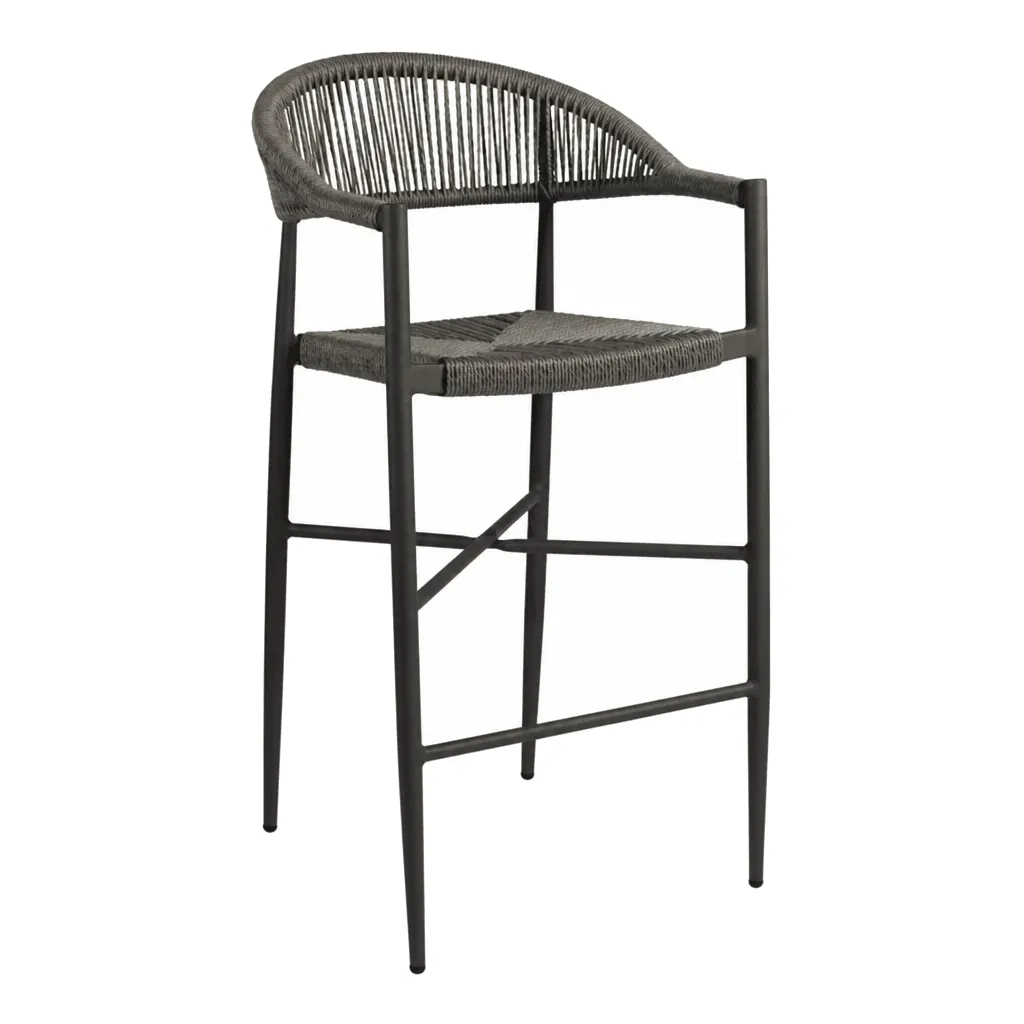
Commercial bar chairs are a good choice when guests are likely to sit for longer and want a back to lean against. Simpler bar stools often make more sense where space and easy movement matter most. Start by measuring your counter height. Then check how much room guests need to sit down, stand up and pass behind each seat.
This guide compares chairs and stools for hospitality venues, covering bar seating heights, footrests, comfort and circulation space. It will help you choose seating that fits both your counter and the way your venue works.
Commercial bar chairs and stools: what is the difference?
The names do not always tell you what a seat offers: stools can have backs, and designs vary. Compare the actual seat, backrest and footprint before deciding.
For guests settling in for a meal or a longer drink, a supportive back may make a bar chair the better choice. If people sit briefly or move between tables and the bar, consider how easily they can get on and off each option. A backrest or arms can affect access as well as comfort.
Do not assume a stool saves space just because it looks narrower when empty. Once someone is seated, their legs, elbows and the room needed to step away can extend beyond the seat itself. Compare the space each option takes in use, especially where staff and guests need to pass behind it.
Match bar seating heights to the counter
Once you have checked how much space each seat needs in use, check its height against the counter. Measure from the finished floor to the underside of the counter, then compare that measurement with the seat height of each bar chair or stool. Overall chair height includes the back and will not tell you whether guests have enough room for their knees.
As a starting point, allow roughly 25–30 cm between the seat and the counter underside. Then check the fit at the actual counter: a thick edge can reduce knee room, while the depth of the overhang affects how close someone can sit. A suitable seat height on paper may still feel awkward if guests have to lean forward to reach the surface.
Measure from the floor guests will actually stand on, including any raised platform or finished flooring. Before ordering a full set, test a sample in place if possible. Sit down, check where your knees and feet fall, and make sure you can get on and off the seat comfortably.
Check footrests and everyday comfort
Once the height feels right, check where your feet rest. At bar height, guests may not be able to place their feet on the floor, so a well-positioned footrest gives them somewhere comfortable to settle rather than leaving their legs dangling.
Try the seat and footrest together: can you sit back while keeping your feet supported, or do you have to lean forward to reach the rail? Notice the seat shape, too. A supportive back on a commercial bar chair may suit longer meals, but only if the seat and footrest also feel right for the counter.
Finally, test how guests get in and out. A seat that feels comfortable in open space may be awkward to approach when a table edge or neighbouring stool limits movement. Check the arrangement with the surrounding furniture in place, especially where guests will regularly stand up to let others pass.
Allow room for circulation, not just seats
Count the space each seat uses in use, not just the width of its base. Measure with someone seated and the chair or stool pulled back to a natural position. A row that fits neatly against the counter when empty may leave too little room behind it once guests arrive.
Next, walk the routes that guests and staff actually take. Can people reach tables, doors and service points without asking seated guests to move? Check what happens when someone stands up while another person passes, particularly at corners and near entrances.
Before settling on a seat count, mark candidate positions on the floor with tape. Place your existing furniture around them and test the layout with seats occupied and people moving between them. If a route feels cramped, removing one position may make the remaining seats easier to use.
Choose a design for your venue and setting
Once you know how many seats fit, think about how guests will use them. For longer restaurant meals, commercial bar chairs with backs may offer the support guests want. For quicker drinks or café visits, simpler stools may be easier to pull out and move. Neither is the right choice for every venue: match the seat to the time guests spend there and the space available.
For outdoor areas or layouts that change between services, check whether seating is weather-suitable, easy to move and practical to store. The Atlantic Stacking Bar Stool is a lightweight, weather-resistant option designed for commercial indoor and outdoor use. Its stacking design may help where seats need to be put away or rearranged.
Style matters alongside these practical checks. If you’re considering a woven look, read our guide to rattan and woven furniture for commercial spaces. If you’re also choosing chairs for nearby tables, our guide to polypropylene and plastic commercial chairs covers another seating option.
A final checklist before you order
Before ordering commercial bar chairs or stools, record the height from the floor to the counter underside. Check your intended seat height against it. Note the available knee room beneath the counter, then measure the usable floor area once walkways and nearby furniture are accounted for.
Check the actual model rather than relying on its appearance: is the footrest at a useful height, and does the back offer the support your guests need? Confirm its indoor or outdoor suitability for your setting, and work out where seats will go when they are not in use.
Where possible, set a sample seat in the intended layout and ask staff to move through the space as they would during service. Choose the option that lets guests sit and stand comfortably without making access awkward for anyone passing behind them.
Frequently asked questions
Can commercial bar chairs and stools sit together at the same counter?
Yes, provided their seat heights both suit the counter and guests have comfortable room for their legs and feet. Check each design’s overall width too: a bar chair with a back may need more space than a simple stool.
How should I plan seating around a corner or curved bar?
Measure usable counter space along the edge where guests will sit, rather than treating the corner as a full seating position. Allow for people to turn, get up and pass behind each seat; a layout marked out on the floor can help you spot tight points before ordering.
Are stacking bar stools a good choice when layouts change?
They can be useful when you need to clear floor space or change the number of seats, as long as you have somewhere to store the stack. Check the stool’s dimensions, stacking suitability and whether its materials suit your indoor or outdoor setting.
Do armrests make bar seating harder to fit along a counter?
They can, because armrests add width and may prevent seats from tucking neatly under the counter. Check the overall width and arm height against the counter, then leave enough space for guests to get in and out without disturbing their neighbours.