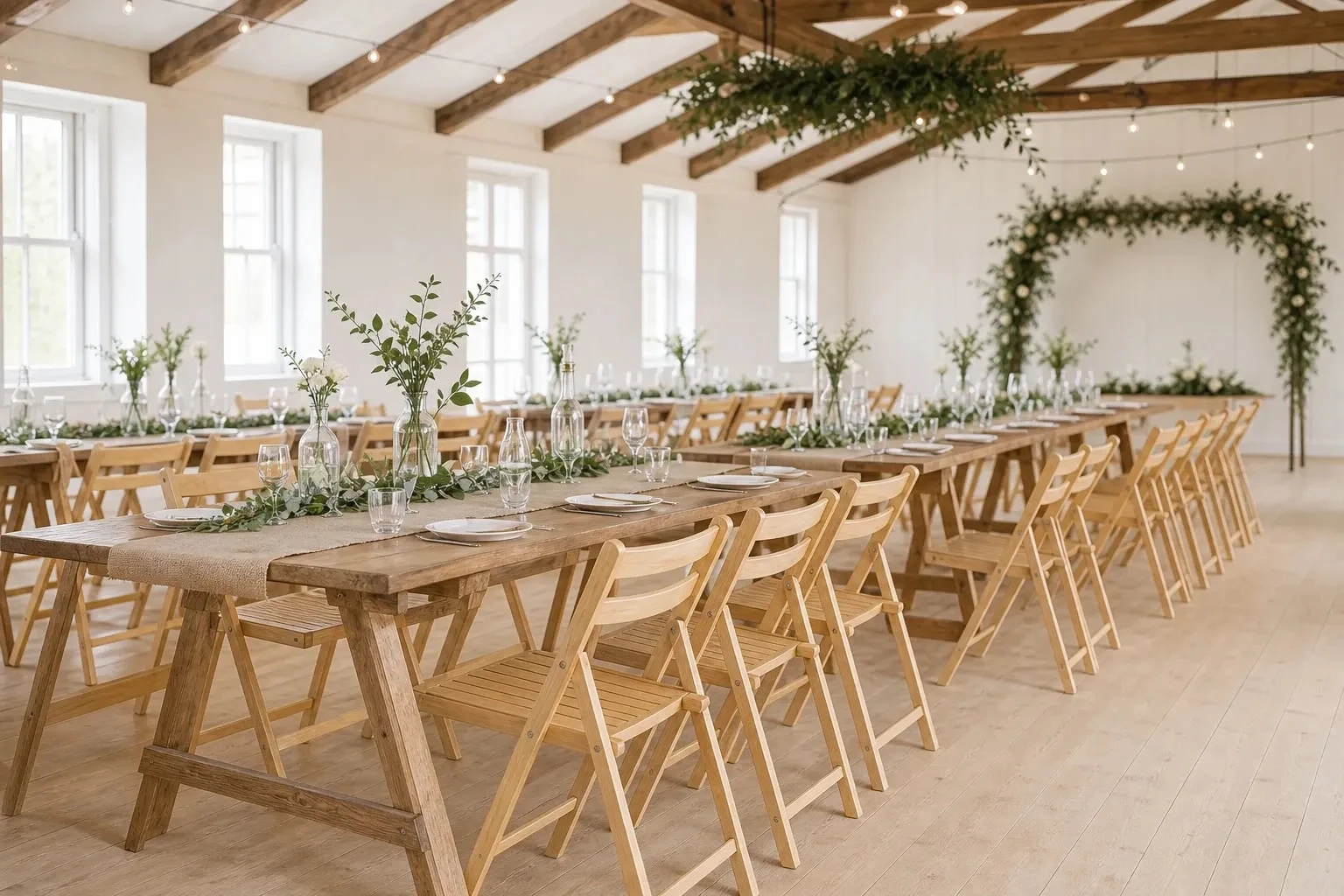
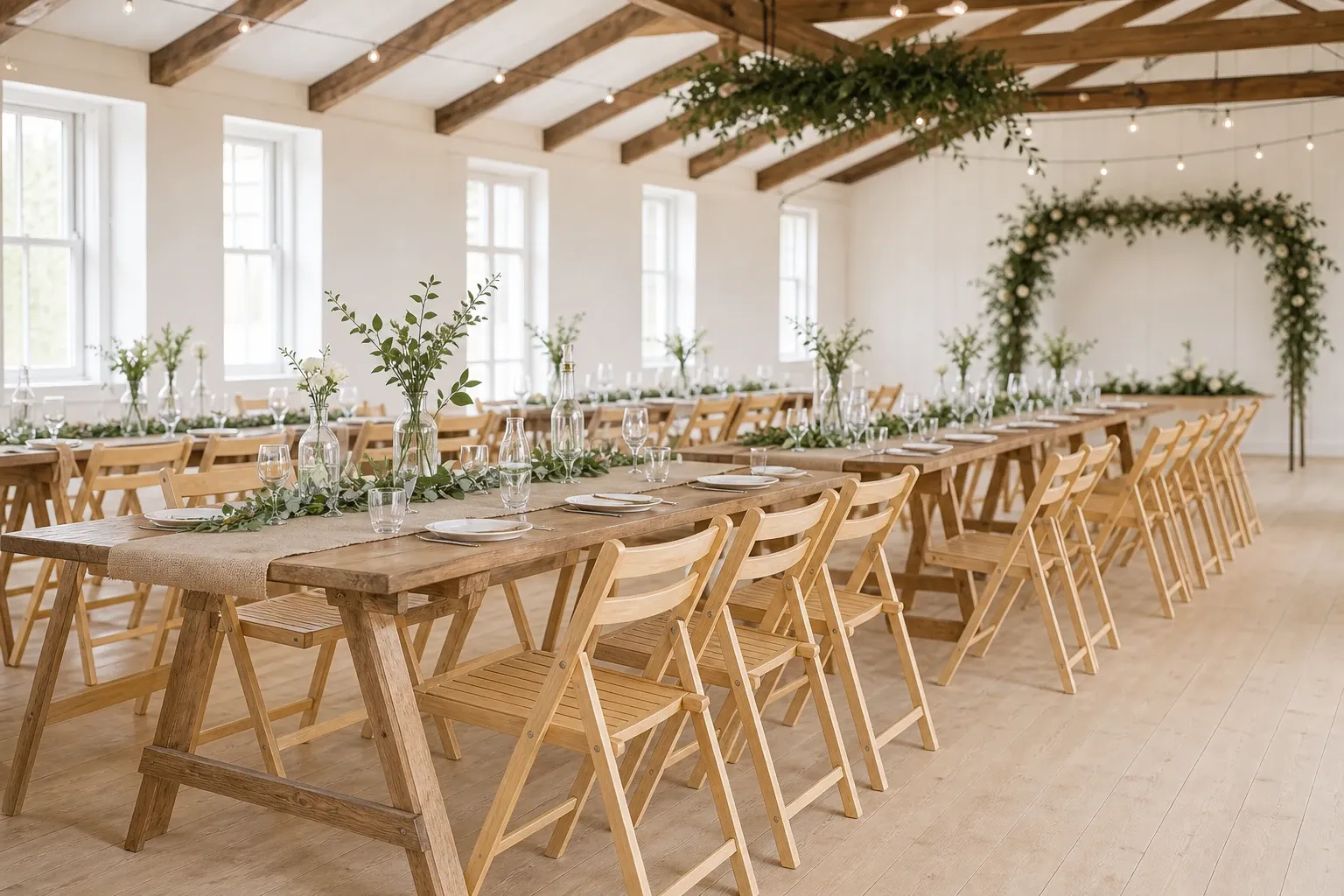
Choose function room furniture that your team can move and store easily, while supporting the layouts your venue regularly uses. A chair or table may look the part, but it is less useful if it slows down every room reset.
This guide covers how to assess chairs and trestle tables for handling, storage and comfort, then test them against your seating layouts before you buy. The aim is a room that looks right for each event without making changeovers harder than they need to be.
Start with the changeovers your venue needs
Start by listing the events your room hosts, the typical guest numbers and how often the layout changes. A room that switches from a meeting to a dinner on the same day needs a different furniture plan from one that is reset only once a week. Note which layouts are booked most often, so you can prioritise the changes staff make regularly.
Next, walk the route between the function room and storage. Check door widths, lifts, corridors and tight turns, and consider how staff will carry or wheel furniture through them. A chair that stores neatly is less useful if it is awkward to move along that route.
Finally, separate the pieces that must move at every changeover from those that can stay in place. This helps you focus on easy handling where it matters, while keeping a consistent look across the room.
Choose function room chairs for handling and comfort
For chairs that move at every changeover, assess more than how they look in a row. Ask staff to lift, carry, set out and put away a sample chair, then consider whether guests will be comfortable sitting in it for a full event. A chair that is awkward to handle can slow down even a simple room reset.
Folding function room chairs make sense when the same space regularly switches between seated events and open-floor use. They can be put away when not needed, whereas fixed seating may suit areas that rarely change. Check the folded dimensions and storage method of each model rather than assuming folding chairs also stack.
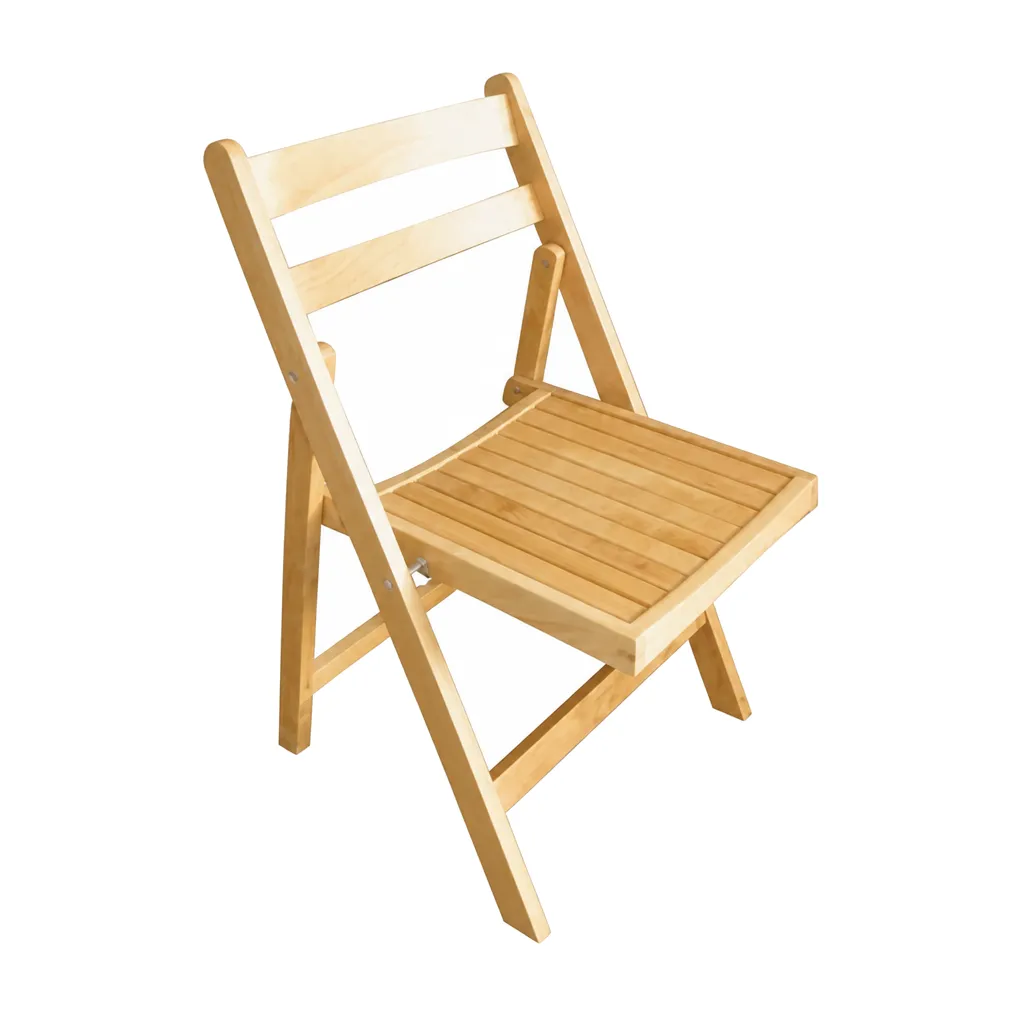
The Wooden Folding Chair Midsomer Maxi 2025 is a lightweight beechwood option designed for weddings and events, with easy handling and storage in mind. It is one example to consider if your room needs a warm wooden look alongside frequent changeovers. Before ordering, check how many chairs your storage area can accommodate and how far staff must carry them.
Compare folding tables for events with other trestle options
For tables, start with the usable surface rather than the finish. A dining setup needs room for place settings, while meetings may need space for papers and equipment; a buffet needs enough depth for serving dishes without crowding the edge. Measure what each booking requires, then check that the table dimensions work in the layouts you use most often.
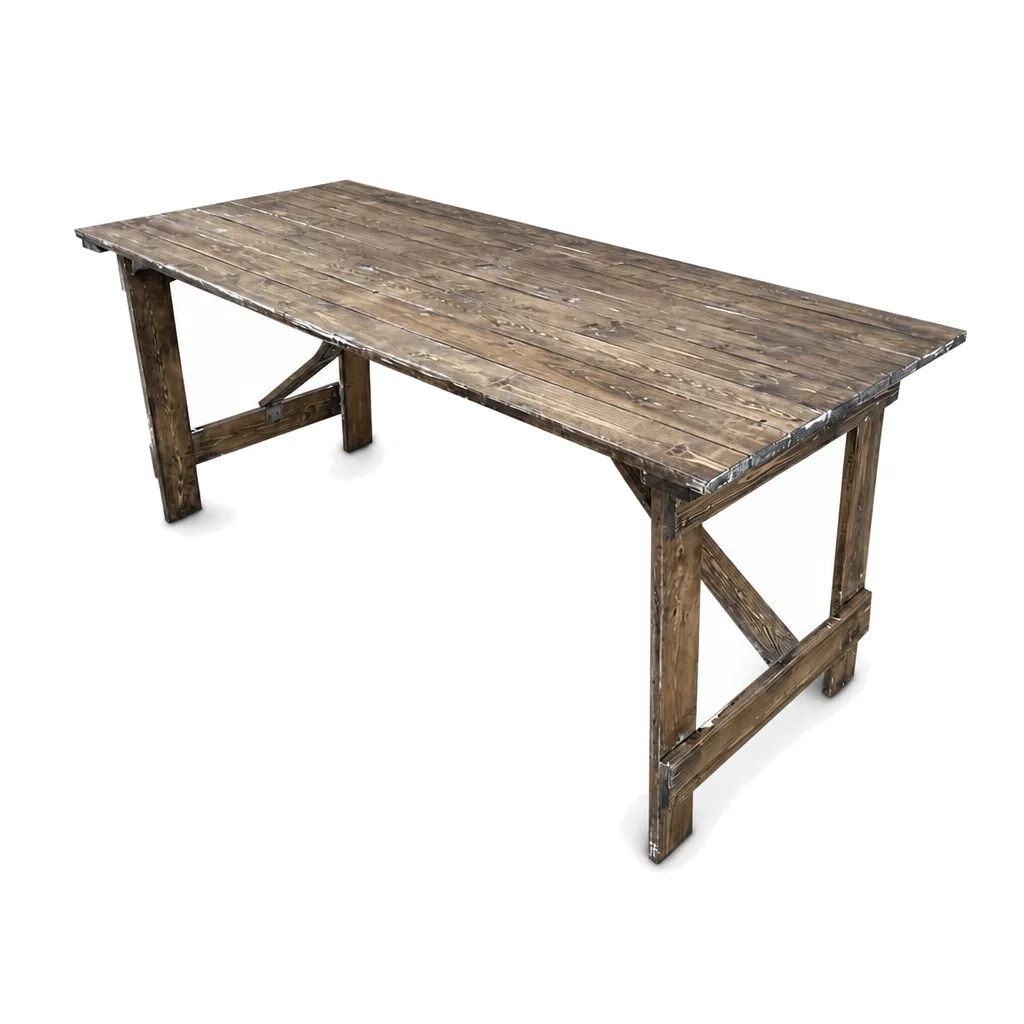
The Rustic Trestle Table in Limeoak measures 6' × 2'6", while the Rustic Trestle Table in Natural measures 6' × 3'. That extra six inches of width may be useful for table settings or buffet service, but it also takes up more floor space and needs a wider storage position. Test both sizes against your planned aisle widths and the number of tables you need to put away between bookings.
The Limeoak table is described as foldable, which may suit frequent changeovers. The supplied details for the Natural table do not confirm a folding mechanism, so do not assume it handles or stores in the same way. Before ordering either option, check how staff will carry it, where it will stand or stack, and whether it fits through the route to storage.
Test function room seating layouts before you buy
Once you know how tables will be handled, test the function room seating layouts they need to support. Draw the room to scale using its actual dimensions, then sketch dining, presentation and open-floor arrangements. Mark doors, fixed features and the route to storage so each plan reflects a real changeover.
Don’t judge capacity by how many chairs fit on an empty floor. Draw tables and chairs as they will be used, including space behind occupied seats for guests to get up and staff to pass. If a layout feels tight on paper, try it in the room before committing to an order.
Compare the sketches to see whether one chair style and a limited range of table sizes can cover several bookings. Fewer furniture types can simplify room resets and reduce the number of pieces you need to store. If a special layout needs extra furniture, weigh how often you sell it against the storage space it will take up.
Plan storage around the full furniture set
Measure your storage area with chairs folded and tables in their stored position, rather than relying on their dimensions when set out for an event. Allow space around each stack or group so staff can grip and lift pieces without shifting the entire stock. Check the height and width of doors, too: furniture that fits the store may still be awkward to get through the entrance.
Think about the order in which furniture comes out. If chairs are always needed first, keep them accessible rather than behind tables used only for occasional layouts. Group pieces by the bookings they serve most often, and leave room to return them without reorganising the store after every event.
Finally, walk the full handling route from storage to the function room. Note narrow turns, thresholds and busy corridors that could slow a changeover. For rooms reset frequently, easy access matters as much as how many pieces the storage area can hold.
Use a short buying checklist before placing an order
Before ordering, list the layouts your venue actually uses and count the chairs and tables needed for each. Check those figures against your usual booking pattern rather than buying solely for one maximum-capacity arrangement. This helps you choose function room furniture that earns its storage space.
- Quantities: Allow for each planned layout, including any tables or chairs that must be kept aside for a quick reset.
- Specifications: Confirm dimensions, finishes and indoor suitability with the supplier. For folding pieces, check their dimensions when stored as well as when in use.
- Practical fit: Make sure staff can handle the pieces along the route you have checked and that the full set fits the available storage area.
Give priority to the setups you sell most often. A smaller, workable range of chairs and tables can be more useful than pieces chosen for an occasional layout that slows everyday changeovers.
Frequently asked questions
Can the same function room chairs work for weddings and conferences?
Yes, if they suit both the look of a wedding and the seating time needed for a conference. Check how easily staff can move and store them, then test a full row or table setting to make sure guests have enough space.
How many spare chairs and tables should a venue keep?
Base your spare stock on your largest booked layout and the changes you need to make between events, rather than a fixed percentage. Count what each layout uses, then allow for replacements and any extra seating or tables you regularly offer, without exceeding your storage space.
What should I confirm about a folding table before ordering?
Confirm its dimensions in use and when folded, how it is carried and stored, and whether staff can set it up safely within your usual changeover time. Check that it fits through your doors and storage routes, and that its size works with your planned seating layouts.
Should all the furniture in a function room have the same finish?
No, but finishes should work together when the room is set for each type of event. A consistent finish on frequently rearranged tables and chairs can make mixed layouts look more settled, while other pieces can add contrast without complicating a reset.